

MEMBER BLOG
Share Your Expertise
Have an idea, insight, or resource to share? We’d love to hear from you.
Submit your original content for consideration.

YOUR EXPERTISE. OUR COMMUNITY.
OC Shrinks members are invited to share their expertise, insights, and professional perspectives through original articles for the OC Shrinks Blog.
Share your knowledge.

Have something valuable to share?
OC Shrinks members have a wealth of knowledge, experience, and perspective to share. We’re inviting our members to contribute original articles and professional insights to the OC Shrinks Blog.
It’s an opportunity to share your expertise with our community, provide valuable information to fellow mental health professionals, and introduce others to the work you do.
WHAT CAN YOU WRITE ABOUT?
We welcome thoughtful, educational content related to mental health, professional practice, wellness, and the work you do.
Ideas include:
Clinical and professional insights
Educational topics and mental health trends
Practice tips and resources
Specialized areas of expertise
Professional experiences and perspectives
Helpful resources for clinicians and mental health professionals
Community or industry topics relevant to our members
Have another idea? We’d love to hear it.
WHAT WE'RE LOOKING FOR

We’re looking for content that is:
Helpful — provides information or perspective readers can use
Relevant — speaks to the mental health community
Educational — offers expertise, insight, or meaningful discussion
Original — created specifically for the OC Shrinks Blog
Articles should generally be 600–1,200 words and written for a professional, informed audience.
READY TO CONTRIBUTE?
Have a completed article ready to submit? Or just have an idea or topic you’d like to run by us first?
We’d love to hear from you ◡̈
When submitting, please include your name, credentials, practice or business name, a brief bio, and your proposed topic or completed article.
A NOTE ABOUT PROMOTIONAL CONTENT
The OC Shrinks Blog is primarily an educational and professional resource—not an advertising platform.
If you’re looking to promote a service, program, event, business, or special offer, we have other promotional opportunities available through OC Shrinks. Contact us.
When submitting, please include your name, credentials, practice or business name, a brief bio, and your proposed topic or completed article.
All submissions are reviewed prior to publication and may be edited for length, clarity, formatting, and style. Submission does not guarantee publication.
NOT A MEMBER YET?
The OC Shrinks Blog is a member benefit, and we’d love to have you be part of the community.
Membership connects you with a network of mental health professionals throughout Orange County and beyond, along with opportunities for professional visibility, referrals, networking, events, educational resources, and more.
Have another idea or something you’d like to share? Drop us a line. We’re always open to fresh ideas and new ways to educate, connect, and support our community.

5 Signs Your Private Practice Needs Better Systems—Not More Clients
Is your private practice busy but still feels harder to manage than it should be? Here are five signs that your practice may need better systems—not more clients—and practical ways to streamline your workload, strengthen referrals, and build a more sustainable practice.
If your practice is busy but you still feel like you're constantly playing catch-up, the problem may not be that you need more clients.
It may be that your systems haven't caught up with your practice.
Many therapists are excellent clinicians but were never taught how to build the business infrastructure that supports a sustainable practice. Over time, small inefficiencies can turn into hours of unnecessary administrative work.
Here are five signs it may be time to streamline.

1. You’re spending too much time on administrative tasks
If you're regularly answering the same emails, searching for information, rescheduling appointments, chasing paperwork, or manually tracking referrals, there's probably an opportunity to automate or simplify.
Your time is better spent on clinical work, relationships, and the parts of your practice that actually require you.
2. Referrals are inconsistent
You shouldn't have to start from scratch every time your caseload changes.
Build relationships with other therapists, physicians, treatment centers, schools, attorneys, and other professionals who regularly interact with the people you serve. A strong referral network creates consistency—and gives you people to refer to when a client isn't the right fit for your practice.
3. Your website doesn't clearly explain what you do
A potential client should be able to answer three questions quickly:
Who do you work with?
What do you help with?
How do they get started?
If someone has to hunt through your website to figure those things out, you may be losing inquiries before they ever become consultations.
4. You’re doing everything yourself
Being independent doesn't mean you have to do everything alone.
Look at the tasks you're doing that don't require your clinical expertise. Billing, bookkeeping, scheduling, marketing, website updates, graphic design, and administrative work can often be delegated, automated, or streamlined.
The goal isn't to build a giant team.
The goal is to stop spending your highest-value time on your lowest-value tasks.
5. You don't have time to work on your practice
This may be the biggest sign of all.
If you're constantly working in your practice—seeing clients, answering emails, managing crises, filling cancellations—you may never have the space to think strategically about where you want your practice to go.
Set aside regular time to look at your referral sources, finances, schedule, marketing, client experience, and professional goals.
Even one hour a month can make a difference.

Your Practice Should Support Your Life—Not Consume It
A successful private practice isn't simply one with a full caseload.
It's one that is financially sustainable, professionally fulfilling, and structured in a way that allows you to have a life outside of work.
If your practice feels harder to manage than it should, don't automatically assume you need to work harder.
Sometimes you need a better system.
And sometimes you just need other therapists who understand exactly what you're talking about.
That's one of the reasons professional community matters.
At OC Shrinks, we believe therapists shouldn't have to build their practices completely on their own. Our community connects mental health professionals across Orange County and beyond through referrals, networking, professional resources, job opportunities, events, and ongoing connection.


Are Clients & Referral Partners Finding You?
A quick checklist to help therapists improve online visibility, strengthen referral relationships, and make it easier for clients and referral partners to find them.

The 10-Minute Therapist Visibility Checklist
Your clinical skills matter — but if the right people can’t find you, they can’t connect with you.
Use this quick checklist to make sure your online presence and professional network are working for you.
Online Presence
☐ Google Business Profile is updated
Your name, specialty, location, hours, website and photos are current.
☐ Your therapist profiles are refreshed
Your online profile directory reflects your current specialties, availability and ideal clients.
☐ Your website bio speaks to your ideal client
Your bio clearly communicates:
Who you help
What challenges you support
Your therapeutic approach
What makes your work unique
☐ Your specialties are clearly listed
Potential clients and referral partners should quickly understand who you serve.
☐ You have a professional headshot
A quality photo helps build trust and connection.
Referral Network
☐ You have intentional referral relationships
You know professionals who serve similar populations and understand when to refer to one another.
☐ You have a networking strategy
You regularly attend events, connect with colleagues and nurture professional relationships.
☐ Your follow-up system is organized
You have a way to keep track of new connections and stay in touch.
☐ Your email signature is working for you
Include your specialty, website, and ways to connect.
☐ You are involved in your professional community
Relationships — not just referrals — build sustainable practices.

Ready to strengthen your visibility and grow your referral network?
If you checked off a few items, great — you already have a strong foundation. If you noticed a few gaps, that’s even better. Visibility grows when you make small, intentional updates consistently.
OC Shrinks helps therapists, agencies, and mental health professionals build trusted connections through networking events, referral opportunities, and a supportive professional community. Whether you’re looking to increase referrals, meet like-minded providers, or stay connected to the local mental health community, we’re here to help you grow with intention.
EXPLORE OC SHRINKS TO LEARN MORE ABOUT UPCOMING EVENTS, COMMUNITY CONNECTIONS AND WAYS TO GET INVOLVED.
🍊JOIN A COMMUNITY BUILT FOR CLINICIANS & START BUILDING REAL RELATIONSHIPS THAT SUPPORT YOUR PRACTICE.

The Quiet Pattern Behind Clinician Burnout
Most clinicians understand burnout intellectually but still struggle with overfunctioning, overcommitment, and chronic emotional load in their clinical work. This article explores why insight alone is not enough to change these patterns, and why sustainable practice requires peer context, relational support, and environments that normalize capacity awareness and reduce professional isolation.
The intention is to reduce professional isolation and create a consistent space where clinicians can stay connected, reflective, and supported while continuing to build their work in practice.
When Clinical Insight Isn’t Enough: The Overfunctioning Loop in Therapists

Most clinicians don’t struggle with insight. If anything, they have too much of it.
They can name the pattern, map the defense, and track the attachment strategy in real time. And yet many still find themselves in a familiar loop: overcommitting, overthinking, overfunctioning—and wondering why exhaustion keeps returning even when nothing is “technically wrong.”
Burnout is rarely a skill problem
For therapists, burnout is less about competence and more about structure. It often develops in highly responsible, relationally attuned clinicians who are trained to hold complexity.
It can look like:
Absorbing more emotional labor than is accounted for
Losing track of personal limits during high-demand periods
Delaying rest until “everything is handled”
Feeling internal tension even with a manageable caseload
Low-grade resentment that never quite gets named
Defaulting to “I’ll just take care of it”
Over time, this gets mislabeled as professionalism—when it’s actually chronic overextension. These are the kinds of patterns often explored in real time inside OC Shrinks—a peer community for clinicians working with burnout, overfunctioning, and capacity strain in practice, not just theory.
When identity reinforces overfunctioning
For many therapists, being “good at the work” quietly becomes tied to being the one who holds the most.
That shows up as:
Over-responsibility beyond clinical scope
Difficulty tolerating imperfection or rupture
Defaulting into leadership or containment roles without choosing them
Pressure to stay regulated and available even when depleted
These are also the traits that make someone effective—which is exactly why the pattern persists.
What starts as attunement slowly becomes identity: the stabilizer.
In many cases, these identity-level patterns are easier to see and shift when clinicians are in ongoing contact with peers who are actively naming the same dynamics in their own work. That’s a core focus inside OC Shrinks.
Insight doesn’t equal regulation

One of the most overlooked realities in clinicians is the gap between cognitive awareness and nervous system capacity.
“I know I’m overextended, so why am I still saying yes?”
“I know I need rest, so why can’t I slow down?”
“I know this pattern—so why does it keep happening?”
This is where burnout quietly lives: not in lack of understanding, but in lag between insight and embodied change. This gap between insight and embodied change is often where peer-based professional spaces become most supportive—especially when those spaces are built around clinicians actively working with these patterns together, like OC Shrinks.
Sustainability is structural, not individual
Boundaries and balance are often framed as mindset shifts. In reality, they require conditions such as:
External reinforcement of limits
Environments that normalize pacing
Peer contexts where overfunctioning is visible, not rewarded
Ongoing contact with colleagues actively working against collapse patterns
Without this, even skilled clinicians tend to default back to over-responsibility under pressure.
Why peer context matters more than insight
Most therapists are doing this work in relative isolation. Over time, even strong insight becomes circular when it isn’t mirrored or reinforced externally.
What changes behavior isn’t more analysis—it’s repeated exposure to peers naming the same dynamics in real time and actively working with them.
That shifts what feels normal. And what feels normal tends to shape behavior more than intention ever will.
A different kind of professional support
There is a growing need for spaces that are less about teaching or supervision, and more about relational grounding.
Spaces where clinicians can:
Notice overfunctioning without performance pressure
Speak honestly about capacity and fatigue
Stay connected to clinical identity without over-identifying with it
Recalibrate sustainability alongside peers doing similar work
Not as an escape from clinical responsibility—but as a way of staying in it without depletion becoming the baseline.
Closing Reflection

Most clinicians don’t need more information about burnout. They need repeated, normalized contact with environments where they are not required to override their own limits to be seen as competent.
Sustainability is not a personal trait. It is a supported practice.
And in many cases, it requires community with others who are also actively undoing the reflex to overfunction. That’s often the difference between insight and integration.
These shifts rarely hold through insight alone or in isolation. They become more sustainable when clinicians are in ongoing contact with peers naming the same real-time dynamics—overfunctioning, boundary drift, emotional load creep, and the subtle ways professional identity can override personal capacity. What changes behavior is not more information, but consistent exposure to a professional context where these patterns are visible, normalized, and worked with over time rather than individually managed after the fact.
This is the gap OC Shrinks was created to address: a membership-based clinician community designed to reduce professional isolation and support sustainable practice through ongoing peer connection and shared reflection.
Join the Community
OC Shrinks is a membership-based clinician community focused on sustainable practice, peer connection, and real-time support around overfunctioning, burnout, and capacity in clinical work.

A Simple Blueprint for Therapy Consultations That Actually Work
Consult calls don’t need to feel awkward, rushed, or uncertain.
Most therapists were never taught how to structure them—so they end up overthinking what to say or how to guide the conversation.
This simple, grounded script walks you through exactly how to run a 15-minute consultation in a way that feels clear, professional, and aligned—so both you and the potential client can determine if it’s the right fit.
Consult calls shouldn’t feel awkward, rushed, or improvised.
And yet most therapists were never actually taught how to run them.

“Consult calls aren’t about convincing someone to work with you — they’re about creating enough clarity for both of you to make a decision.” — Shelby Castile, LMFT
In graduate school we learn how to diagnose, conceptualize cases, and help clients build meaningful lives. But almost no one shows us how to structure the very first conversation a potential client has with us.
So when someone books a consultation, many therapists find themselves wondering:
• What should I say?
• How do I explain my approach clearly?
• When do I talk about fees?
• What if the client is talking to several therapists?
• How do I know if someone is actually a good fit for my practice?
Without a structure, consult calls can feel uncertain — for both you and the potential client.
After 20 years in private practice, I’ve learned that consultation calls don’t need to be complicated. They just need a clear, thoughtful structure.
A Grounded Approach to Consultation Calls
The goal of a consult call is not to “sell” someone into therapy.
The goal is simple — to create a clear, respectful conversation where both you and the potential client can determine whether working together feels like the right fit.
When consultation calls have a framework, they become:
• more relaxed
• more professional
• easier to navigate
• and far less awkward
For both people on the call.
Below is a simple structure you can use to guide a 15-minute consultation in a way that feels natural, clear, and aligned.
A Simple Consultation Script

“Confidence on consult calls doesn’t come from having the perfect words — it comes from knowing where you’re going.” — Shelby Castile LMFT
1. Opening the Call
“Hi [Name], it’s so nice to meet you. I’m really glad you reached out. Before we dive in, I just want to let you know this is a space for you to share what’s been going on and ask any questions you might have about working together.”
2. Invite Them to Share
“Do you want to tell me a little bit about what’s bringing you in right now?”
3. Clarify and Understand
“Can I ask a couple of questions to better understand what you’re looking for?” (Ask what you need clinically, while also noticing tone, expectations, and readiness.)
4. Reflect and Transition
”Thank you for sharing that — it really helps me get a sense of what you’re dealing with.”
5. Explain Your Approach
“Based on what you’re sharing, this is typically how I work…”
(Keep this simple and human. This isn’t a lecture — it’s a snapshot.)
6. Logistics and Fees
“Sessions are [length], we typically meet [frequency], and my fee is [rate]. I’m [in-network/out-of-network], and I can provide superbills if needed.”
7. Check for Fit
“How does that feel to you?”
“Do you feel like this could be a good fit?”
8. Next Steps
“If it feels like a good fit, the next step would be…”
(Explain scheduling, intake, or waitlist clearly.)
9. Close the Call
“Feel free to take some time to think about it — there’s no pressure at all. And if any other questions come up, I’m always happy to answer them.”
Who This Is For
This is for therapists who want their consultation calls to feel:
• Relaxed instead of awkward
• Clear instead of improvised
• Professional without feeling transactional
• Aligned with their values as clinicians
Whether you’re newly licensed or have been in practice for years, having a clear structure makes consult calls simpler, calmer, and more effective.
Final Thought
Consult calls don’t need to feel awkward or unpredictable.
With a clear structure in place, they become what they’re meant to be:
A short, thoughtful conversation that helps both you and the potential client decide whether working together makes sense. And that’s all they really need to be. ◡̈
About Me
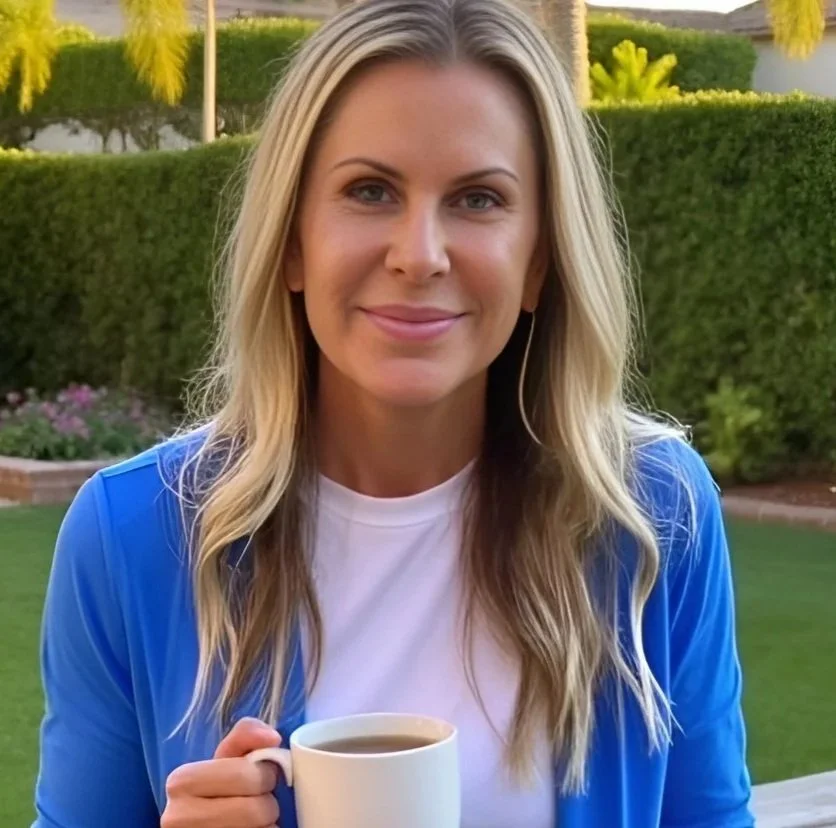
I provide supervision and consultation for clinicians at various stages of practice who are seeking thoughtful guidance, ethical grounding, and a space to process the realities of this work without judgment or pressure.
I’m Shelby Castile, Licensed Marriage & Family Therapist, and I’ve been working as a psychotherapist for over 20 years.
I run a private practice serving clients across California and I’m also the founder of OC Shrinks, a professional community of over 5,000 mental health providers who connect, collaborate, and support one another in building sustainable and meaningful careers in this field.
Over the years I’ve seen how many talented therapists struggle with the business side of private practice — not because they aren’t capable, but because no one ever taught them these pieces. Consultation calls are one of those things. When done well, they create clarity for both therapist and client. When done poorly, they can feel confusing, uncomfortable, and lead to mismatched expectations. A simple structure changes that.
If you’re a therapist looking for more support, connection, and practical guidance around building your practice, you’re invited to join the OC Shrinks community.
It’s a space for clinicians who want to grow—both professionally and personally—while staying connected to others who understand the work.
If you have any questions or want to connect before joining, feel free to reach out directly:

Starting a Private Practice: What Therapists Need to Know
Starting a private practice in Orange County can feel overwhelming—but it doesn’t have to be. This step-by-step guide walks California therapists through licensure, office setup, marketing strategies, client growth, and building a thriving practice with confidence.
A Practical Guide to Starting a Private Practice as a Psychotherapist in Orange County
(Step-by-Step for California Therapists Ready to Launch)

Starting a private practice as a psychotherapist in Orange County can feel exciting and overwhelming all at once. From licensure requirements to marketing your services, there’s a lot to consider. This practical, step-by-step guide will help California therapists navigate the process with clarity and confidence.
1. Understand Licensing and Legal Requirements
Before anything else, ensure you meet California licensing requirements for your field (LMFT, LCSW, PsyD, etc.). You’ll also need to:
Register your business: Decide whether you’ll operate as an LLC, sole proprietorship, or other entity.
Obtain necessary insurance: Malpractice coverage is a must. Consider general liability insurance for your office as well.
Check local regulations: Newport Beach, Irvine, and other OC cities may have zoning or business permits to review.
Tip: Keep all documentation organized—licenses, insurance, contracts, and intake forms—for both compliance and efficiency.
2. Define Your Niche and Ideal Client
A clear niche helps attract clients who resonate with your approach. Ask yourself:
Who do I want to serve? Adults, teens, couples, or specific trauma populations?
What issues am I uniquely equipped to help with? Anxiety, trauma, grief, relationship challenges?
How will my offerings stand out in Orange County’s mental health landscape?
Tip: Specializing doesn’t limit you—it helps your marketing and builds trust faster.
3. Set Up Your Office or Virtual Practice
Decide if you’ll operate in-person, telehealth, or hybrid. Key considerations:
Office location: Proximity to public transport, parking, and accessibility.
Telehealth setup: HIPAA-compliant platforms for video sessions, secure client portals, and electronic payment systems.
Furnishings and ambiance: Create a safe, welcoming space for clients.
4. Pricing, Policies, and Paperwork

“Many clients actively seek private-pay therapists, making OC one of the most viable regions in California to build a sustainable practice without relying on insurance panels.” - Shelby Castile, LMFT
Set session fees based on local rates and your experience. Orange County therapists typically charge $150–$300 per session.
Create clear policies: Payment, cancellations, and insurance reimbursement procedures.
Use professional contracts for services, informed consent, and client intake forms.
Tip: Streamlined, professional paperwork saves time and builds trust with clients.
5. Marketing and Visibility
Building a private practice isn’t just about being a great therapist—it’s about getting found:
Website and SEO: Your site should clearly explain your services, credentials, and approach. Optimize for local searches like “psychotherapist in Newport Beach.”
Social media: Share content that reflects your niche and personality.
Networking: Join local professional organizations and communities. OC Shrinks provides a platform to connect with over 5,000 therapists for referrals and collaboration.
6. Build Referral Relationships (Your Real Marketing Strategy)

“Websites don’t fill practices — relationships do.”- Shelby Castile, LMFT
Websites don’t fill practices — relationships do.
Focus on connecting with:
Local therapists
Psychiatrists
OB/GYN providers
Wellness professionals
School counselors
Community organizations
“In Orange County, reputation spreads quickly inside professional networks. Community beats algorithms every time.”
7. Build Your Client Base and Reputation
Offer complimentary consultations to introduce yourself.
Collect testimonials and referrals (with client consent).
Track metrics for client retention, cancellations, and waitlists to optimize your workflow.
Tip: Consistency in marketing and outreach is critical in your first 6–12 months.
8. Utilize Support Networks
You don’t have to go it alone. Joining a professional community like OC Shrinks gives you:
Mentorship and coaching opportunities
Peer support and networking
Marketing resources, templates, and guidance for growing your practice
Want to start your private practice with confidence? Have questions about licensure, marketing, or client growth?
Reach out today or join OC Shrinks to access resources, mentorship, and a supportive therapist network.
Final Thoughts
Starting your private practice in Orange County is a rewarding journey, but it requires planning, consistency, and support. By following these steps—understanding licensing, defining your niche, creating policies, marketing strategically, and leveraging a supportive community—you’ll build a thriving, sustainable practice.